
Central New Delhi is the practical first-visit base; choose Old Delhi for a Shahjahanabad-focused stay
Compare Old Delhi and central New Delhi as a base for sights, Metro connections, luggage access and different first-visit itineraries.
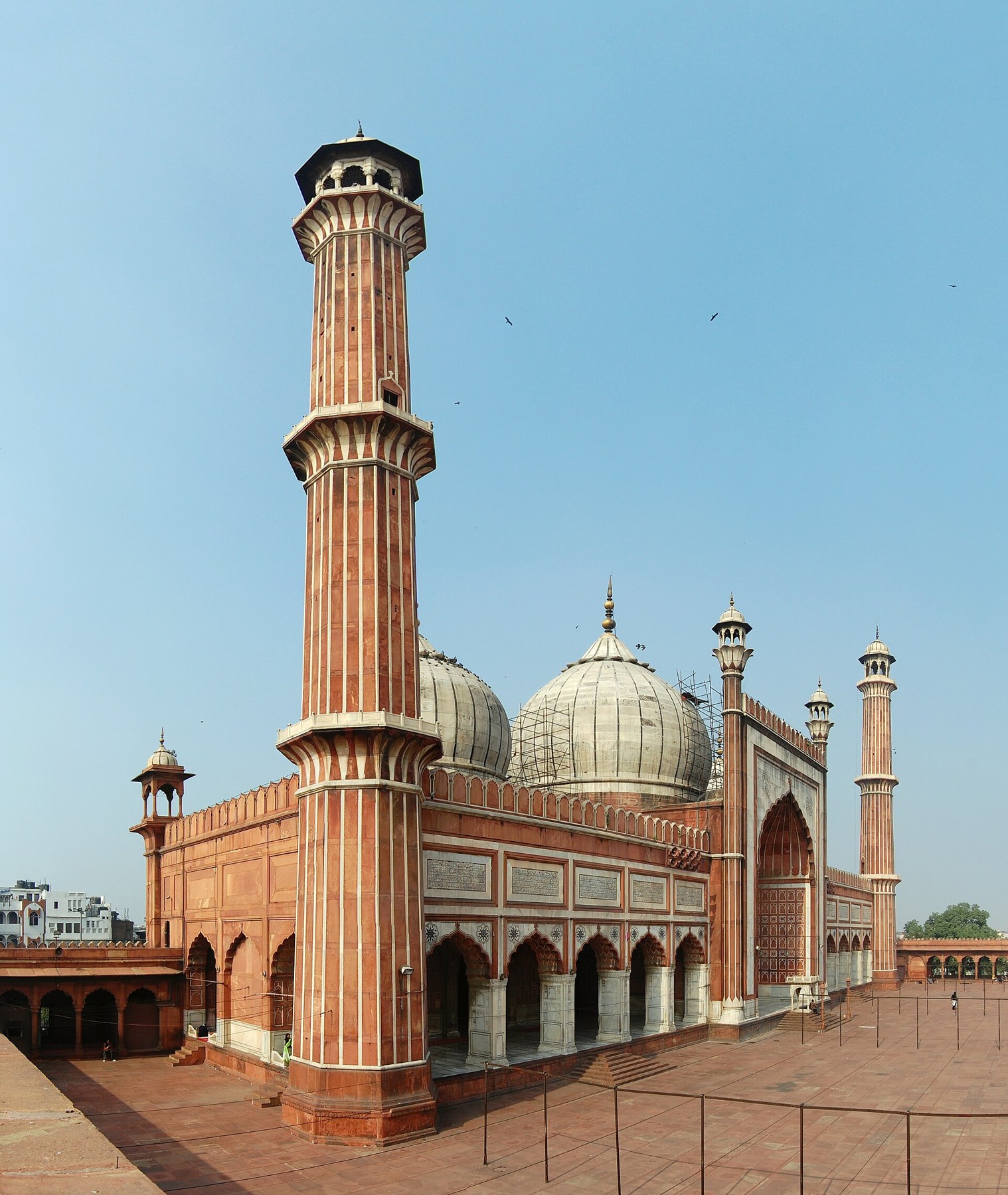
For most first-time visitors, central New Delhi around Connaught Place, Janpath or Barakhamba Road is the more practical base. It is better positioned for an itinerary split among Old Delhi, the central government precinct and sights farther south.
Choose Old Delhi around Chandni Chowk or Jama Masjid when Shahjahanabad is the main purpose of the trip: you expect to make several outings there and are willing to check the exact arrangements for taxis and luggage.
This is not a choice between “historic” and “modern” Delhi. Both areas contain historic places. It is a choice between staying inside the old walled city’s market district and using central New Delhi as a hub for a more dispersed first itinerary.
Compare specific areas, not broad labels
“Old Delhi” and “New Delhi” are too broad to use as hotel filters without checking a map. Here, the useful comparison is:
- Old Delhi: the Chandni Chowk–Jama Masjid area, near the Red Fort, Gurudwara Sis Ganj Sahib and Fatehpuri Masjid.
- Central New Delhi: Connaught Place and the adjoining Janpath–Barakhamba Road area.
A property can have “New Delhi” in its postal address without being near Connaught Place. Paharganj, for example, is beside New Delhi Railway Station but is a different base from Connaught Place. Always inspect the property pin, the route to a useful Metro entrance and the point where a taxi can actually stop.
The practical comparison
| Question | Old Delhi: Chandni Chowk/Jama Masjid | Central New Delhi: Connaught Place/Janpath |
|---|---|---|
| Best reason to stay | Put Shahjahanabad’s monuments, markets and places of worship at the centre of the trip | Divide a short visit among Old Delhi, central New Delhi and south Delhi |
| Useful Metro stations | Chandni Chowk, Chawri Bazar and Jama Masjid, depending on the property | Rajiv Chowk, Janpath and Shivaji Stadium, depending on the property |
| Nearby visitor focus | Red Fort, Jama Masjid, Gurudwara Sis Ganj Sahib and Fatehpuri Masjid | Connaught Place, Janpath, Jantar Mantar, Gurudwara Bangla Sahib and the state emporiums |
| Road arrival | The hotel’s exact approach matters; part of Chandni Chowk Road is a daytime non-motorised zone | A door-to-door taxi arrival is generally simpler, but the property should still confirm its pickup point |
| Best fit | A heritage-led stay with several Old Delhi outings | A short or varied first visit |
Delhi Tourism’s station-by-station visitor guide associates Chandni Chowk station with the Red Fort, Jama Masjid, Gurudwara Sis Ganj Sahib and Fatehpuri Masjid. It associates Rajiv Chowk with Connaught Place, Janpath, Jantar Mantar, Gurudwara Bangla Sahib and the state emporiums on Baba Kharak Singh Marg. These are broad visitor associations, not promises that every sight is a short or step-free walk from the station.
Why central New Delhi usually works better first
Delhi’s prominent visitor sights do not form one compact district. Old Delhi’s main cluster is relatively concentrated, but India Gate, the National Museum, Lodhi Garden, Humayun’s Tomb and Qutub Minar are elsewhere. Delhi Tourism’s guide groups many central-government-area sights with Central Secretariat and lists Qutub Minar under its own station.
Connaught Place works as a hinge between these areas. Rajiv Chowk is an interchange on the Metro network, while Janpath and Shivaji Stadium can be more convenient for properties on the southern and western sides of the district; consult the current DMRC network map against the exact hotel location. The important point is not that every journey is direct. It is that a mixed itinerary does not begin each morning in the northern part of the sightseeing map.
Central New Delhi also supplies sights and stops of its own. Delhi Tourism places Jantar Mantar on Parliament Street in Connaught Place, and its visitor guide identifies Janpath, Gurudwara Bangla Sahib and the state emporiums around the same central cluster.
For an airport arrival, the district places some hotels near the Airport Express stations at New Delhi or Shivaji Stadium. DMRC describes the line as connecting New Delhi Railway Station, IGI Airport and Yashobhoomi Dwarka Sector 25. That is a location advantage, not a guarantee of an easy walk with bags: check the hotel’s actual route from the relevant station.
When Old Delhi is the better base
Old Delhi becomes the stronger choice when the walled city is more than a single sightseeing day. Shahjahanabad was the walled capital built under Shah Jahan; Delhi Tourism’s account of the historic city identifies the Red Fort, Jama Masjid, Chandni Chowk and its lanes among its defining elements.
A nearby room can make it easier to divide this area into shorter outings rather than combining monuments, places of worship, markets and meals into one long day. It also removes the journey back to central New Delhi after each Old Delhi outing.
The main booking issue is the final approach. Delhi Traffic Police says the stretch of Chandni Chowk Road from the Red Fort to Fatehpuri is a non-motorised vehicle zone from 9am to 9pm. The advisory does not make all of Old Delhi inaccessible, but it does mean that “near Chandni Chowk” is not enough information for a luggage arrival.
Before paying for an Old Delhi room, ask the property:
- Where will a taxi stop during the restricted hours?
- How far is that point from reception with luggage?
- Does the final route include steps or a narrow lane?
- Which Metro station and exit should a guest use?
- Will reception be operating at the planned arrival time?
A named drop-off point and a realistic walking route are more useful than a claimed distance from the Red Fort.
Match the base to the trip
For two to four sightseeing days: choose central New Delhi unless most planned outings are in Old Delhi. Its more balanced position is usually worth more than avoiding one commute to Shahjahanabad.
For a heritage-led stay: choose Old Delhi if the Red Fort–Chandni Chowk–Jama Masjid area will occupy several outings. Confirm the luggage route before booking.
For an onward train: choose according to the station printed on the ticket. Old Delhi Railway Station and New Delhi Railway Station are separate stations; similar names are not a reason to assume the same hotel works for both.
For reduced mobility or heavy luggage: favour the property with the clearest confirmed route from vehicle or station to reception, regardless of district. DMRC lists lifts, wide gates, ramps and tactile paths among its facilities for disabled passengers, but those station facilities do not establish that the surrounding pavement or hotel entrance is step-free.
The booking rule
Shortlist hotels by the route to a useful station and confirmed door access, not by the district name alone.
In Old Delhi, match the property to Chandni Chowk, Chawri Bazar or Jama Masjid station and obtain a precise taxi handoff plan. In central New Delhi, compare Rajiv Chowk, Janpath and Shivaji Stadium with the hotel pin and the rest of the itinerary.
For a typical first visit, central New Delhi is the more practical default. Choose Old Delhi deliberately when spending several outings within Shahjahanabad is more valuable than having a balanced base for the wider city.